Being told you moan in your sleep is unsettling — you have no memory of it at all. Usually it is one of a few harmless things, and the sound itself tells you which.
7 min read · General wellness information, not a medical diagnosis · Auf Deutsch lesen →
The short answer
Moaning or groaning in your sleep is common and usually harmless — most often catathrenia (a long groan on the out-breath), dream-related sleep talking, or soft snoring. The sound tells you which: an out-breath groan when you feel rested is benign; an in-breath rattle with gasps or pauses and daytime tiredness points toward sleep apnea and is worth checking.
Nobody discovers this about themselves directly. Someone tells you — a partner, a roommate, a friend you shared a hotel room with on a trip — that you moan, groan or make noises in your sleep. And it lands oddly, precisely because you have no memory of it whatsoever; it is a piece of your own behaviour you have never once witnessed. The good news is that sleep vocalisations are common and almost always harmless. The more useful news is that what the sound is like usually tells you which harmless thing it is — and, occasionally, flags the one that is worth a closer look. The family of sleep behaviours moaning belongs to is outlined in the Wikipedia article on parasomnias.
Why do I moan in my sleep: the usual explanations
Catathrenia (nocturnal groaning). A long, drawn-out, monotone groan on the out-breath, often coming in clusters toward morning. It sounds mournful but it is not distress, and it does not usually disturb your own sleep. We go deep on it in catathrenia.
Dreams and light sleep talking. Moans, mutters and half-formed words that ride along with dreaming. An emotional dream can pull real sounds out of you — usually brief, varied, and tied to REM sleep.
Snoring's quieter relatives. Some "moaning" is actually soft snoring or a breathing noise on the in-breath — a completely different mechanism, and the one worth ruling out if it comes with gasps or pauses.
Effortful groans with movement. Occasionally the sound simply tracks the body shifting position or straining slightly, and means nothing at all.
The key split: out-breath, vocal, and you feel fine → usually benign. In-breath, rattling, with pauses and daytime tiredness → worth screening for sleep apnea.
When in the night it happens is a clue too
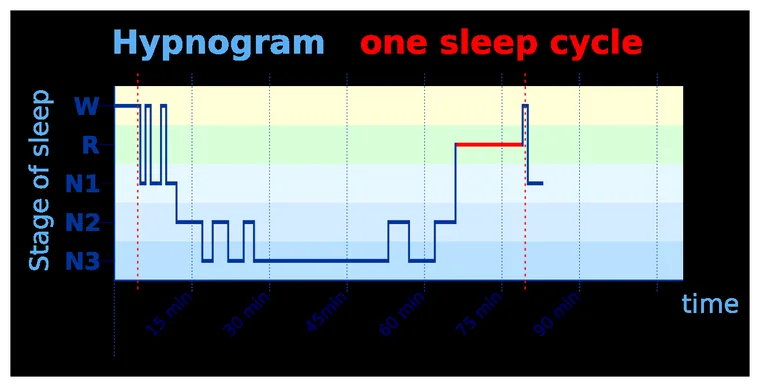
Dream-related sounds and catathrenia both lean toward REM sleep, which is concentrated in the second half of the night. Snoring, by contrast, tends to track body position and how relaxed your airway is, and can happen from the moment you drop off. So "you were groaning near morning" and "you were rattling all night from the moment your head hit the pillow" are pointing at different things.
REM sleep, where dream sounds and catathrenia tend to occur, is concentrated in the second half of the night. Snoring is less tied to a stage and more to position and airway. Schlafgut · CC BY-SA 3.0 · Wikimedia Commons
How to figure out which is yours
Two questions do most of the work. Is the sound on the in-breath or the out-breath? An out-breath groan leans toward the harmless catathrenia end; an in-breath rattle leans toward snoring. And do you wake refreshed or wrecked? Feeling fine points to benign vocalisation; waking tired despite enough hours — especially with gasps or pauses — is the flag worth taking seriously.
The louder, in-breath, pause-and-gasp end of the scale is the part worth checking. Out-breath groans when you feel rested sit at the benign end.
The obvious snag: you are asleep for every second of it, and a half-awake partner's impression — "you kind of… groaned?" — only carries you so far.
You cannot remember the sound, and the person who heard it cannot reproduce it. That gap — not the moaning itself —
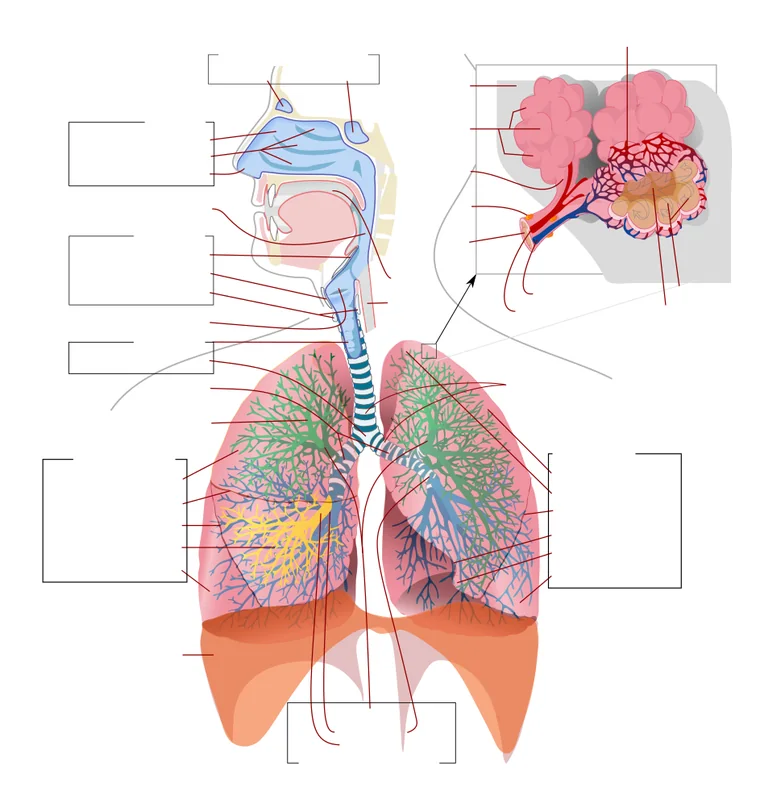
Sleep sounds are shaped in the upper airway: an out-breath groan is made at the larynx (voice box); in-breath snoring is tissue vibrating higher up. Where in the airway, and on which breath, is what separates benign from worth-checking. LadyofHats, Jmarchn · Public domain · Wikimedia Commons
When to see a doctor
Sleep noises are usually benign and need no treatment. See a doctor if the sound comes with gasping, choking, witnessed breathing pauses or heavy daytime sleepiness (which point toward sleep apnea), if it is genuinely disrupting a partner's sleep, or if it is paired with acting out dreams or violent movements — that is a different parasomnia worth assessing on its own.
Where SleepTrace fits
This is the gap a phone closes neatly. SleepTrace records the sounds of your night on your iPhone and lays them over your sleep stages, so instead of a secondhand description you can actually hear what you sound like — and tell whether it is an out-breath groan in REM (more like catathrenia), a mutter riding a dream, or in-breath snoring with pauses that is worth taking further.
Frequently asked questions
The most common harmless cause is catathrenia — a long groan on the out-breath during sleep. Dreaming and light sleep talking also pull moans and mutters out of people. Some 'moaning' is actually soft snoring on the in-breath, which is the one worth checking if it comes with gasps or pauses.
Usually not. Out-breath groaning and dream sounds are benign, especially if you wake feeling rested. It is worth checking with a doctor if the noise comes with gasping, choking or witnessed breathing pauses and daytime tiredness — that points toward sleep apnea rather than simple sleep vocalisation.
References
Alonso J, Camacho M, Chhetri DK, Guilleminault C, et al. Catathrenia (nocturnal groaning): a social media survey and state-of-the-art review. J Clin Sleep Med (2017). Europe PMC
SleepTrace is a wellness app, not a medical device. This article is general information, not medical advice. If your symptoms are frequent, severe or worrying, please talk to a doctor.
Hear your own night. SleepTrace turns a night of audio into your sleep phases, the sounds you made, and how it all trends — no wearable, just the iPhone on your nightstand. Download on the App Store →