Sleep talking is common and usually harmless — it happens when speech surfaces during light sleep or dreaming, often triggered by stress, sleep deprivation, fever or alcohol. On its own it is rarely a sign of a problem, but frequent, intense episodes with acting-out of dreams are worth checking.
Someone tells you that you held an entire conversation last night — argued, laughed, issued instructions to nobody — and you remember none of it. Sleep talking (the clinical name is somniloquy) is one of the most common things people do in their sleep, and one of the most harmless. It ranges from a soft mumble to full, oddly articulate sentences, and the talker is almost never aware of any of it.
What causes sleep talking: the actual triggers
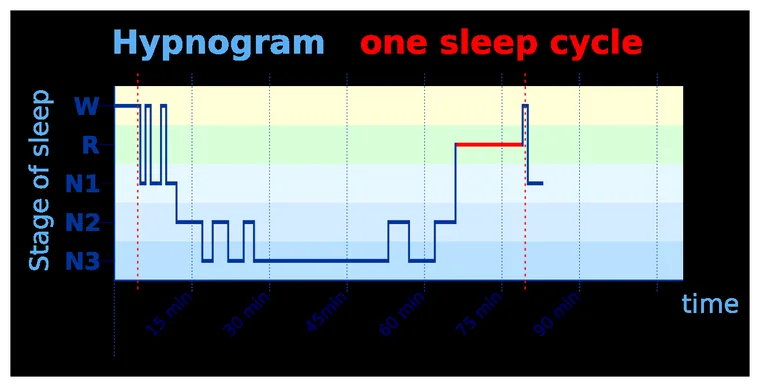
Speech is supposed to switch off during sleep along with the rest of your voluntary muscles. Sleep talking is what happens when a fragment of that speech machinery fires anyway — usually during lighter sleep or around dreaming REM, when the boundary between the sleeping and waking brain is thinnest. In light sleep it tends to be mumbled and meaningless; closer to REM it can track the emotional content of a dream, which is why sleep talking sometimes sounds heated or distressed even though the person is fine. It is a close cousin of the wordless sounds people make in their sleep — the moans and groans covered in why do I moan in my sleep. The condition has a clinical name, somniloquy, and it sits on the same spectrum as other sleep parasomnias you can read about on Wikipedia's sleep-talking article.
What brings it on
Sleep talking runs in families, and it flares with the same everyday triggers that disturb sleep generally — mostly, for most people, it stays perfectly normal behaviour:
- Stress and anxiety — the biggest amplifier for most people.
- Sleep deprivation — an overtired brain talks more.
- Fever and illness.
- Alcohol and some medications.
When it is worth a second look
On its own, sleep talking needs nothing but a patient partner. What changes the picture is the company it keeps. Occasional, mumbled, and you feel rested → benign. Frequent, loud, with acting-out of dreams, thrashing, or gasping → worth checking, because that combination can point to a different parasomnia or to disrupted breathing.
When to see a doctor
See a doctor if the sleep talking is frequent and disruptive, if it comes with acting out dreams or violent movements, or if it travels with snoring, gasping or daytime sleepiness. In children it is extremely common and almost always outgrown; it is only worth attention if it clearly disturbs their rest.
What it does (and does not) reveal
People are often unsettled by the idea that they might blurt out secrets or true feelings in their sleep. It is worth putting that fear to rest: sleep talking is not a truth serum. Because the reasoning, editing part of your brain is offline, what comes out is fragmented and frequently nonsensical — it can be shaped by a dream, a random noise in the room, or nothing coherent at all. A partner may hear a name, a snatch of an argument, an oddly specific instruction, but it is not a reliable window into your waking mind, and reading meaning into it usually causes needless worry or friction. If anything, the content is a small clue to how busy or stressed your sleeping brain is, not to what you are secretly thinking. The useful signal is not what you say but how often and how disruptively, and whether it travels with anything else.
How sleep talking fits the parasomnia family
Sleep talking rarely travels alone; it sits in a family of sleep behaviours that fire when the brain is caught between sleep and wake. The same mechanisms that produce talking at night also produce the range you can read about in why people sleepwalk and in the paralysis and hallucination family. What links them is not one disease but an unstable mix of sleep stages — the brain is not fully asleep nor fully awake, and its motor and language circuits run without the conscious brakes.
The overlap matters for safety and for calm. A partner who hears talking, sees brief movement, or catches you sitting up may worry it is something dangerous; in the vast majority of cases it is a parasomnia, harmless, and no sign of a psychiatric or seizure problem. Knowing it belongs to a recognised family is half the reassurance — the other half is the simple checklist (sleep enough, keep the schedule steady, go light on alcohol) that keeps parasomnias quiet.
Where SleepTrace fits
The frustrating thing about sleep talking is that the one person who cannot hear it is you. SleepTrace records the sounds of your night on your iPhone and lines them up with your sleep stages, so you can actually hear what you said, when in the night it happened, and — crucially — whether it came bundled with snoring or gasps that would be worth taking further.
Frequently asked questions
Not reliably. The sleeping brain fires fragments of speech rather than running a coherent, honest script, so sleep talk rarely maps cleanly onto waking thoughts or secrets. It's better understood as noise from a partially active brain than as a confession.
References
- Liu Y, Chen S, Pavlova M, et al. Prospective study of sleep talking and risk of stroke. (2024). Europe PMC
SleepTrace is a wellness app, not a medical device. This article is general information, not medical advice. If your symptoms are frequent, severe or worrying, please talk to a doctor.
Hear your own night. SleepTrace turns a night of audio into your sleep phases, the sounds you made, and how it all trends — no wearable, just the iPhone on your nightstand. Download on the App Store →