Mouth breathing and 'mouth breather face': what's real
'Mouth breather face' is half playground insult, half real orthodontic concept. Here is what the evidence actually supports — and why night-time mouth breathing is the part worth caring about.
9 min read · General wellness information, not a medical diagnosis · Auf Deutsch lesen →
The short answer
In children, chronic mouth breathing is genuinely linked to a longer, narrower face and crowded teeth, because it changes how the growing face develops — a real orthodontic concept. In adults, whose faces have finished growing, mouth breathing will not reshape your bones; what matters is that it usually signals a blocked nose and is tightly tied to snoring and sometimes sleep apnea.
"Mouth breather" is a playground insult, but "mouth breather face" points at a real orthodontic idea sitting underneath the meme. The claim is that chronic mouth breathing — especially during the years the face is still growing — can nudge facial development in a particular direction. It is worth pulling the meme apart from the medicine, because the genuinely useful part is not how your face looks in photos. It is what breathing through your mouth at night quietly says about your airway.
Mouth breather face: the real concept behind the meme
Breathing is meant to happen through the nose. When it does, the tongue rests up against the roof of the mouth, which helps shape a broad upper jaw, and the nose filters, warms and humidifies the air. The long-term effects are discussed in the Wikipedia article on mouth breathing. When a child breathes through the mouth for years — usually because the nose is blocked by enlarged adenoids, allergies or chronic congestion — that setup changes. The mouth hangs open, the tongue drops away from the palate, and a body of research links this long-term pattern to a longer, narrower face, a more set-back chin, and crowded teeth. Orthodontists have described this cluster for the better part of a century.
Three honest caveats keep it in proportion. It is most relevant during childhood growth. The evidence is largely associative — mouth breathing travels with these features, but proving it single-handedly causes them is harder. And in adults whose faces have finished growing, breathing through your mouth will not remodel your bone structure, whatever a viral video implies.
The orthodontic concern is strongest in growing children. In adults, the airway and sleep effects matter far more than any effect on facial shape.
The part that actually matters at night
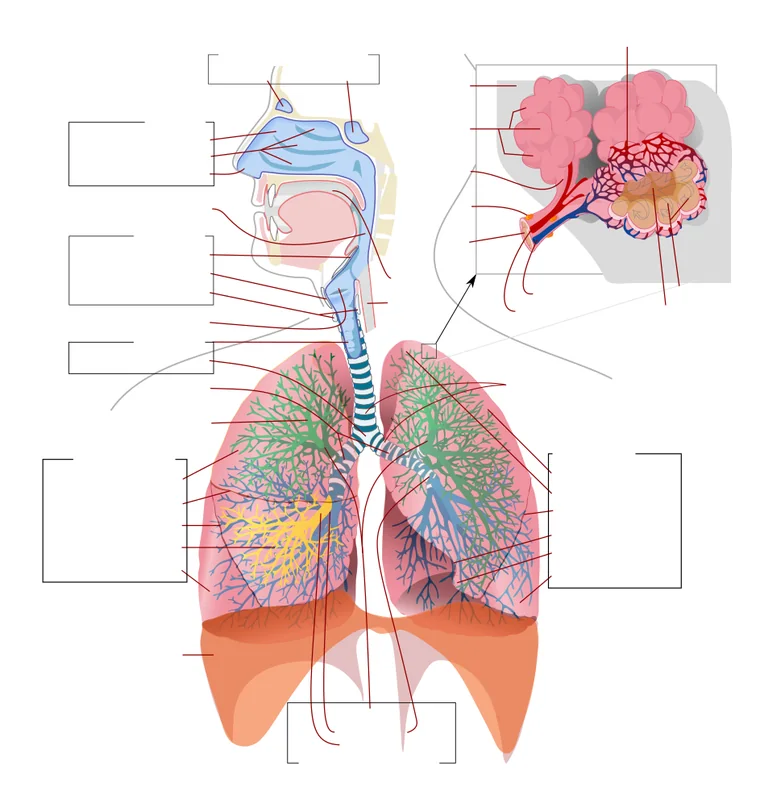
For adults, set the face aside for a moment. Night-time mouth breathing matters because of why it is happening and what it tends to drag along with it. To see the mechanism, it helps to picture the airway — the shared plumbing of nose, mouth and throat that air has to travel through while all your muscles are relaxed in sleep.
The upper airway: air is designed to enter through the nose. When the nose is blocked, breathing defaults to the mouth — which changes the airway's shape during sleep and makes tissues more likely to vibrate and collapse. LadyofHats, Jmarchn · Public domain · Wikimedia Commons
With that picture in mind, the reasons night-time mouth breathing is worth attention line up:
It usually means your nose is blocked — congestion, a deviated septum, allergies. The body simply defaults to the mouth to get enough air.
It is tightly bound up with snoring. An open mouth changes the airway's shape and lets soft tissue at the back of the throat flap and vibrate more. Most heavy snorers are mouth breathers.
It dries you out. Waking with a parched mouth or a raw throat is the classic morning signature — the subject of dry mouth every morning.
It can be a flag for sleep apnea. Not always — but mouth breathing plus loud snoring plus daytime tiredness is a combination worth screening.
These cluster together because they share a root cause — a compromised nasal airway. General pattern, not a diagnostic scale.
Whether mouth breathing changed your face was mostly settled by your teens. Whether it is disrupting your sleep tonight is
When mouth breathing tips into heavy snoring or apnea, the night breaks up like this — frequent awakenings, little deep sleep — which is why it can leave you tired despite enough hours.
What helps
Treat the blocked nose first — allergies, congestion and structural issues are all addressable, often simply, and fixing the cause beats fighting the symptom. People also try nasal strips, saline rinses and (more controversially) mouth taping; we lay out the evidence and the safety caveats in does mouth taping work. For children who mouth-breathe constantly, snore, or sleep restlessly, it is genuinely worth a conversation with a GP, ENT or dentist while the growth window is still open — this is the one situation where acting early can change the trajectory.
When to see a doctor
See someone if mouth breathing comes with loud snoring, witnessed breathing pauses, or heavy daytime sleepiness; if a child mouth-breathes constantly and sleeps restlessly; or if you can never breathe through your nose at all. These point to a treatable airway problem rather than a mere habit.
Where SleepTrace fits
Mouth breathing at night is loud, and loud means audible. SleepTrace records your night on your iPhone and lays the sounds over your sleep stages, so you can actually hear whether you are snoring or breathing through your mouth, and how often across the night. It will not reshape your jaw, but it turns "do I mouth-breathe in my sleep?" from a guess into something you can hear for yourself and, if it matters, take to a doctor.
Frequently asked questions
In growing children, chronic mouth breathing is associated with a longer, narrower face pattern and crowded teeth — a real orthodontic concern, though the evidence is associative. In adults whose faces have finished growing, mouth breathing will not reshape bone structure; the sleep and airway effects are what matter.
It is usually a sign your nose is blocked, and it is strongly linked to snoring and a dry morning mouth. On its own it is not dangerous, but combined with loud snoring and daytime tiredness it can be a flag for sleep apnea and is worth checking.
References
Sotero Grande E, Checa-Caratachea XA, Cruz-Hernández, et al. Mouth breathing and craniofacial development in children: a systematic narrative review. Healthcare (Basel) (2026). Europe PMC
SleepTrace is a wellness app, not a medical device. This article is general information, not medical advice. If your symptoms are frequent, severe or worrying, please talk to a doctor.
Hear your own night. SleepTrace turns a night of audio into your sleep phases, the sounds you made, and how it all trends — no wearable, just the iPhone on your nightstand. Download on the App Store →