The Apple Watch sleep-apnea notification screens for signs of disturbed breathing across many nights, but it is a screening flag, not a diagnosis — it can miss milder cases and does not replace a sleep test. It is a useful nudge to get checked. A phone that records your actual breathing sounds can add complementary evidence.
When the Apple Watch added a sleep-apnea notification, it did something genuinely useful: it put a breathing-disturbance screener on millions of wrists and nudged a lot of people to get checked who never would have. That is worth celebrating. It is also worth being precise about what it can and cannot do — because "my watch didn't flag anything" is not the same as "I don't have sleep apnea."
Why this matters at scale: an estimated 936 million adults aged 30 to 69 worldwide have mild to severe obstructive sleep apnoea, 425 million of them moderate to severe, according to an analysis in The Lancet Respiratory Medicine. A screening signal on a device millions already wear can reach a lot of undiagnosed people — which is exactly why its limits are worth understanding.
How accurate is Apple Watch sleep apnea detection, really?
The Watch does not listen to your breathing. It infers disturbed breathing indirectly, from small wrist movements linked to the body's response to breathing events, averaged over many nights (around a month) before it raises a flag. That design makes it good at catching clearer, more consistent cases — and correspondingly prone to missing milder or intermittent apnea, and to occasionally flagging people who are fine. In screening terms: a useful nudge, not a verdict. For the official framing of how consumer wearables fit alongside medical testing, the Wikipedia sleep apnea article explains the difference between screening and diagnosis clearly.
What to do with each result
- If it flags you: take it seriously and see a doctor about a proper sleep test. A screening flag is a good reason to investigate, not a diagnosis to act on alone.
- If it does not flag you but you have symptoms: do not let the silence reassure you. If you wake gasping, feel exhausted despite enough sleep, or a partner has seen you stop breathing, pursue it anyway — the Watch can miss milder cases.
Where wrist data falls short — and what fills the gap
The core limitation is that a wrist sensor does not hear your night. Snoring, the pause-and-gasp of an apnea event, sleep talking — the actual sounds that make apnea recognisable — are invisible to it. That is precisely the evidence a sleep test looks for and that a doctor finds persuasive.
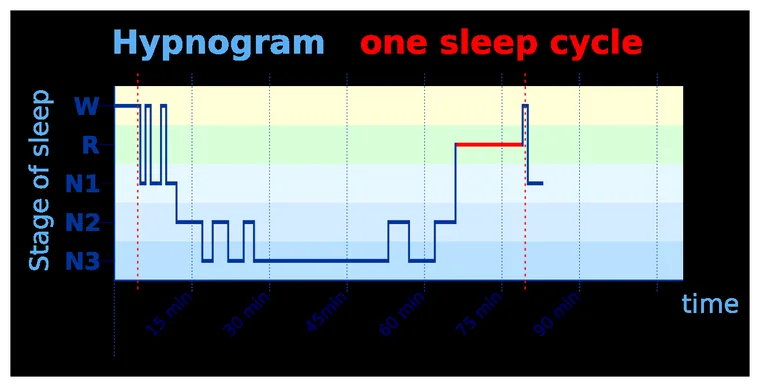
Getting the most out of the notification
If you own a Watch with the feature, a few habits make it more useful. Wear it to bed consistently — it needs many nights to build a picture, so occasional use is why some people never get a reliable read either way. Treat a notification as a starting gun, not a finish line: it is telling you to get a proper test, and the sooner you act the better. And treat the absence of a notification as neutral, not exonerating — if you have symptoms, keep going. It is also worth pairing the wrist data with something the Watch cannot provide: a record of what your nights actually sound like. Walking into a doctor's office with "my Watch flagged possible apnea, and here are three nights of audio showing loud snoring broken by pauses and gasps" is a far stronger case than either signal alone, and it tends to get you to a definitive test faster. (If you are weighing the app landscape rather than the hardware, our guide to the best sleep tracking apps compares the phone-side options.)
Wrist sensing versus what a lab measures
The accuracy question is really a question about what is being measured. A lab sleep study does not count movements; it measures breathing directly — airflow, chest effort, oxygen desaturation — through sensors attached to your body. A wrist device has none of those. It infers "breathing disturbance" from proxies: wrist motion, heart-rate variability, and the occasional oxygen dip from its optical sensor. Good proxies, but proxies nonetheless, which is why device makers position the feature as a screening signal rather than a diagnostic test.
That positioning decides how to treat the results. A strong, repeated signal — several flagged nights, with a clear grouping of pauses — is worth taking seriously and is a legitimate reason to ask for a proper assessment. A single occasional flag is neutral noise. The accurate reading of the tool is: it makes the invisible visible enough to act on, but the diagnosis lives with a professional and, if ordered, a formal sleep study. That is the honest boundary for any home screening device, this one included.
Where SleepTrace fits
SleepTrace complements a wearable rather than competing with it: it records the actual sounds of your night on your iPhone and maps them to your sleep stages, so you can hear the snoring, pauses and gasps a wrist sensor cannot. If your Watch flagged you, that is corroborating evidence to bring to a doctor; if it did not but you have symptoms, it is a way to check what your watch could not hear. Either way, a sleep test remains the final word.
Frequently asked questions
No. The feature is tuned to detect moderate-to-severe apnea from wrist movement averaged over 30 nights, so milder apnea — or apnea that produces little movement — can go unflagged. If you snore loudly, wake gasping, or feel exhausted despite enough sleep, see a doctor even if your watch has never alerted you.
References
- Benjafield AV, Ayas NT, Eastwood PR, et al. Estimation of the global prevalence and burden of obstructive sleep apnoea: a literature-based analysis. Lancet Respir Med (2019). Europe PMC
- Chen Y, Wang W, Guo Y, et al. A single-center validation of the accuracy of a photoplethysmography-based smartwatch for screening obstructive sleep apnea. Nat Sci Sleep (2021). Europe PMC
- Kim MW, Park SH, Choi MS. Diagnostic performance of a photoplethysmography-based smartwatch for obstructive sleep apnea. (2022). Europe PMC
SleepTrace is a wellness app, not a medical device. This article is general information, not medical advice. If your symptoms are frequent, severe or worrying, please talk to a doctor.
Hear your own night. SleepTrace turns a night of audio into your sleep phases, the sounds you made, and how it all trends — no wearable, just the iPhone on your nightstand. Download on the App Store →